How to measure comment-to-DM: the 5 numbers that matter
Ask someone a month into comment-to-DM how it is going, and you usually get a mood instead of an answer. "Seems good." "People like it." "Not sure it does much." None of those tell you what to change on the next post.
The nice thing about comment-to-DM is that every step is something a person visibly does. They comment, a message goes out, they reply, they click, and some of them buy. Count each step, and the gaps between them tell you where the problem is.
After 25 years of building software, one habit has stuck: never look at a funnel as one number. You look at each step separately. The same habit works here.
In short:
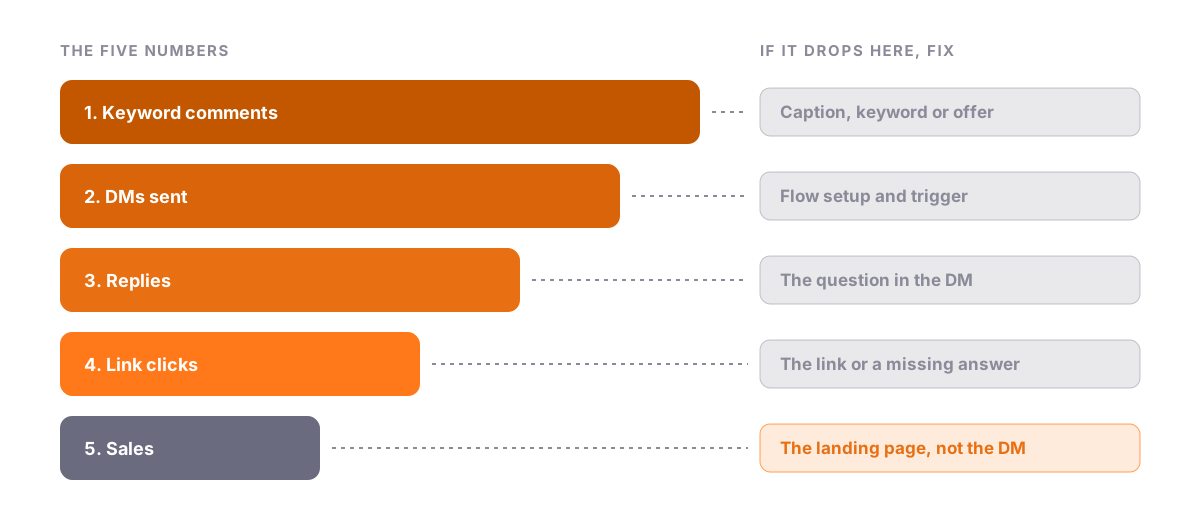
- Track five steps: keyword comments, DMs sent, replies, link clicks, and sales or bookings.
- The biggest drop between two steps points at the one thing to fix.
- Ignore likes, ignore other people's numbers, and compare each flow with its own past.
- Change one thing at a time.
The five numbers
1. Keyword comments
This is the top of everything. It tells you whether the post, the offer and the keyword are pulling their weight. When it is low, the problem sits before the DM: the instruction is buried in the caption, the keyword is vague, or the offer is not worth typing a word for. Caption CTA formulas and keyword examples help here.
2. DMs sent
This should track the keyword comments closely. If it is clearly lower, something in the setup is off: people are writing the word in a way you did not expect, the flow is paused, or the trigger is not listening on that post. Check this number in the first hour after a post goes live, while there is still time to fix it.
3. Replies
A reply means a real conversation has opened, and it is the best test of the question at the end of your first DM. If DMs go out and almost nobody answers, rewrite the last sentence. "Which size are you after?" invites a reply. A message that only states a price does not.
4. Link clicks
A click is the clearest sign of intent you get before money changes hands. Lots of replies but few clicks usually means the link is unclear, or the person still has a question the DM did not answer. Read those replies: they tell you what to add.
5. Sales, bookings or sign-ups
This is the number that matters most and the hardest to tie to one post. Three simple ways to do it:
- A tracking tag on each flow's link, for example
?utm_source=instagram&utm_medium=dm&utm_campaign=bouquet, so your shop or booking tool shows where the visit came from. - A small discount code per flow, so the code itself tells you the source.
- One question at the end of a booking or call: "How did you find us?"
Read the drops, not the totals
Every gap between two steps points at a different fix:
| Where the drop is | What to fix |
|---|---|
| Few keyword comments | The caption, the keyword or the offer |
| Comments, but fewer DMs | The flow setup: trigger, posts, keyword spelling |
| DMs, but few replies | The question at the end of the DM |
| Replies, but few clicks | The link, or the question the DM left unanswered |
| Clicks, but few sales | The page they land on, not the DM |
That last row saves a lot of wasted effort. People often rewrite a DM that is doing its job, when the real problem is a slow or confusing checkout.
The link belongs in the first DM. On Instagram a comment allows one private reply until the person writes back, and a flow does not pause to wait for an answer. A first message that asks "Want the link?" and plans to send it next means most people never get the link, and your click number collapses for a reason that has nothing to do with the offer.
A worked example: a florist's weekend bouquets
Caption:       Weekend bouquets are back. Comment BOUQUET and I'll DM you this week's list.
Trigger:       Comment keyword "BOUQUET", on this post only
First DM:      Hey {{first_name}}, this weekend: peonies, ranunculus and a wildflower mix.
               Pre-order here, pickup Saturday from 9: https://yourshop.com/weekend
               Which one is it for, your own table or a gift?
Public reply:  "Sent, check your DMs"
               "The list is in your inbox"
               "Just sent it, {{username}}"
Tag:           BOUQUET weekend
Now picture the numbers. Plenty of BOUQUET comments, a DM for every one, a good number of replies ("a gift for my mum!"), but few clicks turn into orders. The DM is fine. The problem is after the click. Maybe the pre-order page asks people to create an account first. Fix the page and leave the message alone.
Where each number lives
- Keyword comments: the post's comments, or the trigger count in your DM tool.
- DMs sent: your DM tool. In Chat33, each flow shows how many times it was triggered and how many messages went out.
- Replies: your inbox. Tag contacts as they answer, so you can count them later by filtering on the tag.
- Link clicks: links in Chat33 flows become tracked short links like
chat33.io/t/abc123, so each flow shows its own clicks. - Sales: your shop, booking tool or payment provider, matched up using the tracking tag or discount code.
Whatever tool you use, keep one small weekly sheet: post, keyword, comments, DMs, replies, clicks, sales, and one line on what you will change next week. If you want leads from these flows in a CRM as well, the CRM guide shows how to send them there with a webhook.
What not to measure
- Likes on the post. They say nothing about whether the flow works.
- Someone else's numbers. Different audience, different offer, different price. Compare a flow with its own last month.
- A flow after one day. Wait until you have enough comments to see a pattern before changing anything.
Test one change at a time
Change the keyword, the DM and the link in the same week, and you will never know which one helped. Change one, wait, compare.
If you want to test two versions of a message side by side, an A/B split node can send half the people one version and half the other. Chat33's analytics count the flow as a whole, not each path separately, so give each version its own link tag (for example utm_content=a and utm_content=b) and compare them in your shop or site analytics. A/B testing DM flows covers the details.
FAQ
What is a good reply rate for a comment-to-DM flow?
There is no universal number worth trusting. It depends on your audience, your offer and the question you ask. Measure your own flow for a few weeks, then try to beat that.
Why are my DMs sent lower than my keyword comments?
Usually the trigger is not listening on that post, the flow is paused, or people are writing a variation of the keyword. Matching is "contains" and ignores case, so "bouquet please" matches, but a misspelling like "boquet" does not.
Can I see revenue per flow in Chat33?
No. Chat33 shows triggers, messages sent and link clicks per flow. Revenue comes from your shop or payment tool, connected through a tracking tag or a per-flow discount code.
The short version
Treat comment-to-DM as a five-step funnel: keyword comments, DMs sent, replies, link clicks, sales. The biggest drop between two steps tells you what to fix, from the caption all the way to the checkout page. Compare each flow with itself, change one thing at a time, and ignore likes. Next, see what each plan includes, or read the comment-to-DM guide if you are still setting up your first flow.
Instagram comment-to-DM with tracked linksKeyword triggers per post, one complete first DM, and click tracking on every link, in one flow.